Is your cat constantly scratching? It could be allergies. Feline allergic dermatitis may present with scabs on ears and under the chin, as well as very red, inflamed, and itchy skin.
At Paws N’ Claws Veterinary Surgery (Medical Grooming Centre), we see many dog and cat patients coming in with skin issues including allergies.
Understanding cat allergies
If your feline friend is constantly scratching, licking, or biting at their skin, they might be suffering from allergies.
In some cases, even a simple touch on the affected skin can cause the cat to scratch, lick, or twitch in discomfort and itch.
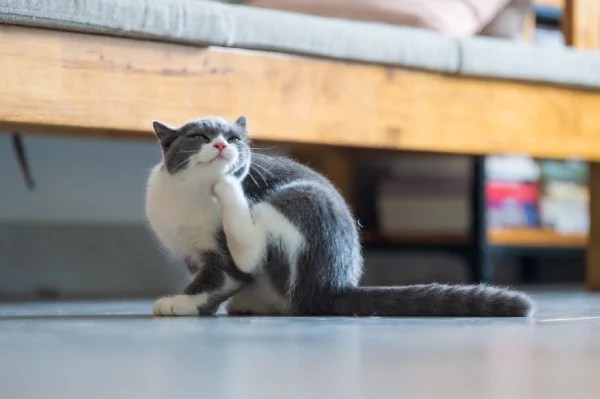
This uncomfortable condition, known as feline allergic dermatitis in cats, can manifest in various ways, ranging from itchy rashes to painful scabs. Dermatitis refers to inflamed skin, when it gets red, itchy, or irritated.
Any rash on your furkid’s skin can quickly progress to small lesions with scabs on them. These may be the result of self-trauma or the result of the allergic reaction itself.
Common symptoms of cat allergies
- Excessive scratching, licking, or biting
- Red, inflamed, and itchy skin
- Scabs or lesions
- Hair loss
- Constant grooming
Allergic dermatitis often affects specific areas, including the lower back, tail base, face, ears, neck, sides (flank), and belly.
In severe cases, infections can develop, leading to pus-filled bumps or pimple-like lesions, which results in increased discomfort for your cat.

Food allergies in cats
One common culprit behind allergic dermatitis is sensitivity to certain food ingredients. While the term “food allergy” is often used, conditions like food intolerance or food-responsive skin disease are also possible.
For cats, the foods typically associated with their allergies include beef, fish, chicken, and daily products (such as milk, cheese, butter).
How do you identify and manage food allergies? Firstly, to determine if food is the issue, your vet might recommend certain approaches, including a food diet trial for 6 to 8 weeks. One possibility is a strict elimination diet, which involves feeding your cat a novel protein diet that they have never consumed before. This can help to rule out food-response dermatitis.
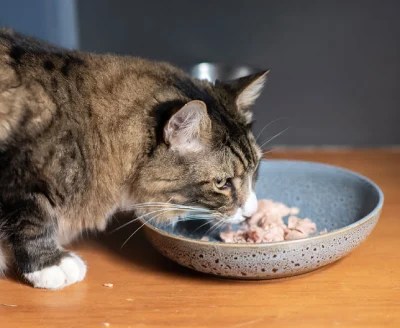
The choice of food is important. Simply switching cat food brands might not be effective, as many commercial foods contain similar ingredients.
It is also key to ensure that your cat stays strictly indoors. This is because some cats who wander outdoors might also be hunting for food outside and/or be fed by your neighbours. In such cases, it can complicate the food diet trial. The trial will only be effective if no other foods besides the protein being trialled are eaten during the trial period.
Read more about skin allergies in pets, including environmental allergies.
When to see a vet for your cat’s skin issues
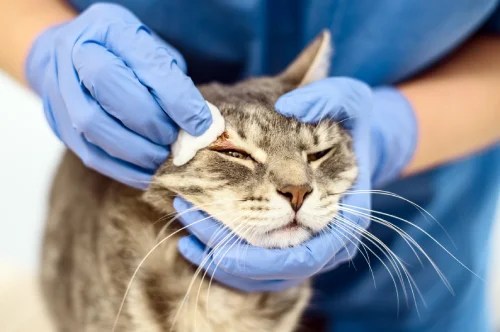
If you notice any unusual skin changes on your cat, such as redness, scaling, flaking, or bald patches, it’s crucial to consult your veterinarian.
They can provide a proper diagnosis and recommend the best course of action.
Left untreated, skin concerns can cause discomfort, pain, and itch. If your furkid scratches incessantly, it could also cause their sensitive skin to get irritated, inflamed, bleed, and susceptible to other infections.
The veterinarian will carefully examine your cat’s skin and discuss their diet and lifestyle. They might prescribe anti-inflammatory medications to alleviate discomfort and recommend a specific diet, whether it’s a home-cooked meal or a commercial hypoallergenic option.
A success story
One of our patients at Paws N’ Claws Veterinary Surgery (Medical Grooming Centre), a cat with severe itching and scabs, experienced relief after being placed on a chicken-only diet and a short course of anti-inflammatory medication. It has lessened her itch and reduced the scabbing. This case highlights the importance of timely veterinary care and a tailored treatment plan.
With that being said, remember that every pet is unique, and what works for one might not work for another. If you suspect your cat has allergies, schedule a consultation with us to develop a personalised treatment plan.
Fear-Free grooming & vet care
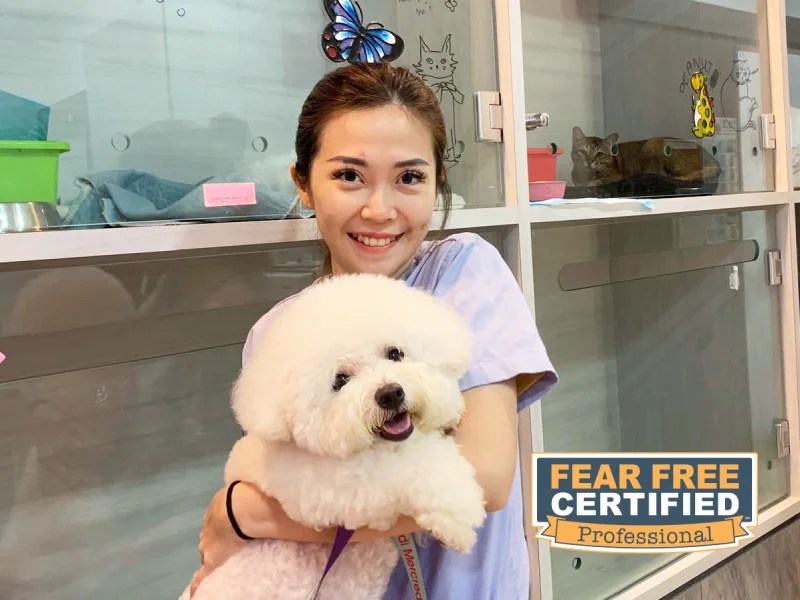
Skin diagnostics services and treatment of skin issues are services we offer at Paws N’ Claws Veterinary Surgery (Medical Grooming Centre) in Singapore. Aside from grooming services, learn more about the veterinary services provided by Paws N’ Claws Vet.
Paws N’ Claws Veterinary Surgery (Medical Grooming Centre) is led by Dr Esther Lam, a Fear-Free certified veterinarian who prioritises your pet’s emotional and physical well-being.
Our team will work with you and guide you through the steps to make your pet’s visit visit as Fear-Free and pleasant as possible.
At our facility, the professionals involved in your pet’s care include vet nurses, technicians, and medical groomers. Veterinarians also play a part in your pet’s medical grooming care when necessary, such as in diagnosing, consulting, and prescribing medications for conditions such as ear infections.
To view our packages or promotions, click here.
 Medical Grooming Centre